
Electrical thermography has become a core part of preventative maintenance in modern data centres. By detecting hotspots, loose connections, overloaded circuits, and failing components, thermal imaging helps prevent outages and maintain uptime. If you’re new to thermal imaging, you can explore the basics in our guide: What Is an Electrical Infrared Thermal Imaging Survey?
One of the most common questions operators ask is: how often should a data centre carry out electrical thermography?
The answer depends on several factors — including load levels, redundancy, equipment age, and compliance requirements. While annual thermography is the industry baseline, many facilities benefit from more frequent inspections.
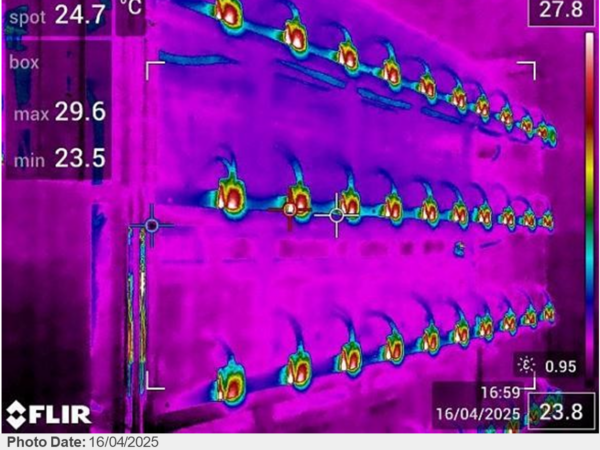
Why Electrical Thermography Frequency Matters
Electrical faults rarely appear suddenly. They develop gradually as components age, loads increase, or environmental conditions change. A connection that is slightly warm today could become dangerously hot in a matter of weeks.
To understand the types of faults thermography detects, see our article on The Most Common Electrical Hotspots Found in Data Centres.
Regular thermography ensures:
- Early detection of developing faults
- Reduced risk of unplanned downtime
- Improved equipment lifespan
- Better load balancing
- Compliance with insurance and audit requirements
If you’re unsure how thermography supports insurance compliance, read:
Electrical Thermal Imaging Inspections for Building Insurance Compliance
The Industry Standard: Annual Thermography
Most data centres schedule annual thermographic inspections as part of their preventative maintenance programme. This frequency is widely accepted across the industry and is often required by:
- Insurance providers
- Risk assessors
- Compliance auditors
- Corporate maintenance policies
For a deeper look at the benefits of thermal imaging, see:
The Benefits of Electrical Thermal Imaging Inspections
When Bi‑Annual Thermography Is Recommended
For many data centres, annual inspections are not enough. Facilities with higher risk profiles often require bi‑annual (twice‑yearly) thermography.
This applies to:
- High‑load environments
- Tier III and Tier IV facilities
- Older electrical infrastructure
- Sites with frequent load changes
If you want to understand which equipment should be prioritised, see:
What Types of Electrical Equipment Require Thermal Imaging Inspections?
Quarterly Electrical Thermography for Mission‑Critical Sites
Some data centres — especially hyperscale, financial, healthcare, and defence environments — require quarterly thermography due to the extreme consequences of downtime.
Quarterly inspections are ideal for:
- Zero‑tolerance uptime environments
- Sites with known electrical vulnerabilities
- Harsh environmental conditions
- Facilities undergoing major upgrades
If your site is London‑based, you may find this useful:
Electrical Thermographic Surveys in London
Event‑Driven Thermography
In addition to scheduled inspections, thermography should also be carried out after:
- Major electrical works
- UPS battery replacements
- Load balancing changes
- Generator or switchgear upgrades
- Unexpected alarms or breaker trips
For a full overview of building‑wide thermal imaging, see:
Electrical Thermal Imaging Surveys for Your Building
How to Determine the Right Frequency for Your Data Centre
The ideal thermography schedule depends on:
- Load profile
- Redundancy level (Tier I–IV)
- Equipment age
- Environmental factors
- Insurance requirements
- Risk tolerance
If you’re comparing costs, here’s a helpful guide:
How Much Does an Electrical Thermal Imaging Survey Cost?
Why More Frequent Thermography Saves Money
While increasing inspection frequency may seem costly, it is far cheaper than:
- Emergency repairs
- Equipment replacement
- SLA penalties
- Lost revenue
- Reputational damage
To understand how thermal imaging supports long‑term maintenance, see:
Thermal Imaging Inspections for Electrical Equipment Maintenance
And if you want to know why APT is the right choice, read:
Why Pick APT to Undertake Your Electrical Thermal Imaging Inspection?
Find out how our Data Centre Electrical Thermography Services can help you choose the right inspection frequency for your facility.

Why you should use APT for your Data Center Thermography Inspection
We follow a structured process for every Thermal Imaging Survey, beginning with a detailed consultation to understand the specific needs of our clients. This allows us to tailor our approach, ensuring we focus on the areas most relevant to each project. We provide the following premium services:
- Supply of an ITC trained Level 3 thermographer
- We us large format FLIR T Series (640×480 resolution) thermal imaging cameras.
- Comprehensive report to include Introduction and fault cover pages, summary problem pages, elevation inventory,
- Detailed fault documentation pages with possible root cause and remedial recommendation (isotherm included if using equations), baseline IR and DC image of every elevation (100% coverage-no isotherm)
- Application of thermal indexing formulas
- Eco Friendly Email Report within 24 hours
# About the Author
Darren Helliwell is a building performance specialist with over 25 years of hands-on experience leveraging thermal imaging, blower door testing, and smoke analysis to optimise air tightness in both new-build and refurbishment projects such as Battersea Power Station, Imperial War Museum and Harrods.
Using advanced infrared thermal imaging cameras alongside state-of-the-art blower door and smoke-testing equipment, Darren’s team delivers detailed thermographic surveys across residential and commercial buildings. These thermal imaging surveys pinpoint invisible air leaks, identify insulation defects, and reveal thermal bridging—empowering architects, contractors, and property owners to make targeted, energy-saving improvements.
Darren’s ongoing mission is to help design teams and contractors harness the power of thermal imaging to achieve truly airtight, energy-efficient building envelopes. By reducing heat loss and driving down energy bills, his thermography expertise supports sustainable, cost-effective construction and refurbishment outcomes.
Connect with Darren Helliwell:
Email] info@aptsoundtesting.co.uk [LinkedIn] https://www.linkedin.com/in/darren-helliwell-78789b26
Contact us now
For more information our Thermal Imaging Service to Data Centers, please contact Darren on 07775623464 and/or email us at info@airpressuretetsing.co.uk