
BS4142 Noise Assessments for Planning
A BS4142 noise assessment is the primary method used in the UK to evaluate the impact of industrial and commercial sound on nearby residential or noise‑sensitive properties. As a UKAS‑accredited ISO/IEC 17025 testing laboratory, we provide precise, traceable and fully compliant assessments that help planning teams, developers and consultants understand rating levels, acoustic character corrections and the likelihood of adverse impact. Our reports are designed to satisfy local authority requirements first time.
What Is a BS4142 Noise Assessment?
A BS4142 assessment compares the specific sound level from an industrial or commercial source with the background sound level, applying corrections for tonal, impulsive or intermittent characteristics.
Related APT articles:
- Industrial Noise Assessments Explained
https://www.aptsoundtesting.co.uk/industrial-noise-assessments/ - Mechanical Plant Noise Assessments
https://www.aptsoundtesting.co.uk/mechanical-plant-noise-assessments/ - Heat Pump Noise Assessments
https://www.aptsoundtesting.co.uk/heat-pump-noise-assessments/ - Delivery Yard Noise Surveys
https://www.aptsoundtesting.co.uk/delivery-yard-noise-surveys/
When Local Planning Authorities Require BS4142
Local authorities typically request a BS4142 assessment when new plant is installed, existing equipment is upgraded, or a development is located close to residential properties.
Related article:
When Is a BS4142 Noise Assessment Required?
https://www.aptsoundtesting.co.uk/when-is-a-bs4142-noise-assessment-required/
How BS4142 Assesses Noise Impact
Related article:
Understanding BS4142 Rating Levels
https://www.aptsoundtesting.co.uk/understanding-bs4142-rating-levels/
- Background Sound Level (LA90)
Measured during representative periods to establish the existing acoustic environment. - Specific Sound Level (LAeq)
The noise contribution from the source under assessment. - Rating Level
The specific sound level plus any acoustic feature corrections for tonality, impulsivity or intermittency. - Assessment of Adverse Impact
The difference between the rating level and background level determines the likelihood of adverse impact.
Our BS4142 Noise Assessment Measurement Process
As a UKAS‑accredited ISO/IEC 17025 field‑testing laboratory, we follow strict procedures to ensure accuracy, repeatability and traceability.
Our process includes:
- Class 1 calibrated instrumentation
- Traceable field calibration checks
- Representative background measurements
- Source‑specific measurements
- Acoustic character analysis
- Full BS4142 rating calculations
Typical Sources Assessed Under BS4142
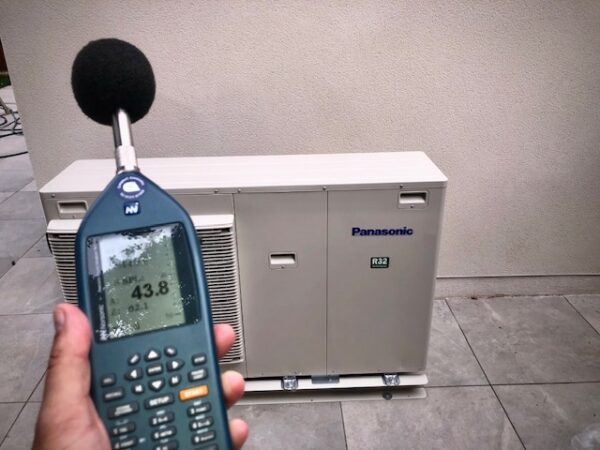
- Air‑source heat pumps
https://www.aptsoundtesting.co.uk/heat-pump-noise-assessments/ - Chillers and condensers
https://www.aptsoundtesting.co.uk/chiller-noise-assessments/ - Mechanical ventilation systems
https://www.aptsoundtesting.co.uk/mvhr-noise-testing/ - Industrial fans and blowers
https://www.aptsoundtesting.co.uk/industrial-fan-noise-assessments/
What Your BS4142 Noise Report Includes
Your BS4142 Noise Impact Assessment report includes the following information:
- Site description and receptor mapping
- Instrumentation and calibration traceability
- Background sound level analysis
- Specific sound level measurements
- Acoustic feature correction assessment
- Rating level calculations
- Assessment of adverse impact
- Mitigation recommendations
- Clear compliance statement
Noise Impact Assessment Reports
https://www.aptsoundtesting.co.uk/noise-impact-assessment-reports/
Mitigation Measures (If Required)
There are many times of noise mitigation measure that can be incorporated into your project to help attain compliance with BS8233, they are:
- Acoustic enclosures and screens
https://www.aptsoundtesting.co.uk/acoustic-enclosures/ - Acoustic barrier design
https://www.aptsoundtesting.co.uk/acoustic-barriers/ - Vibration isolation solutions
https://www.aptsoundtesting.co.uk/vibration-isolation/
Why Choose APT Sound Testing
There is many reason why you should to choose APT Sound Testing us for your BS8233 Noise Assessment, they are:
- UKAS‑accredited ISO/IEC 17025 laboratory
- Consultants that are f the ANC & IOA
- Over 25 years of specialist experience
- Fast turnaround for planning deadlines
- Clear, concise, LPA‑ready reporting
- National coverage
- Expert mitigation advice
Book Your BS4142 Noise Assessment
We provide rapid scheduling and fast reporting to support planning applications, discharge conditions and industrial compliance.
Contact us:
https://www.aptsoundtesting.co.uk/contact-us/
