
Clients often ask us why do they need a BS8233 Noise Impact Assessment, so we have tried to answer this common question, with the following article which provides a complete Guide for Planning & Compliance.
Why you need a BS8233 Impact Noise Assessment for Planning
A BS8233 Noise Impact Assessment is one of the most common acoustic reports required during the planning stage of new developments. Local authorities request these assessments to ensure that noise‑generating developments do not harm nearby residents, and that noise‑sensitive developments (such as new homes, schools, hotels or mixed‑use schemes) are adequately protected from existing noise sources.
Whether you are building new residential units, extending licensing hours, converting a building, or introducing a new commercial activity, a BS8233 noise assessment provides the evidence needed to demonstrate compliance with national guidance and local planning policy.
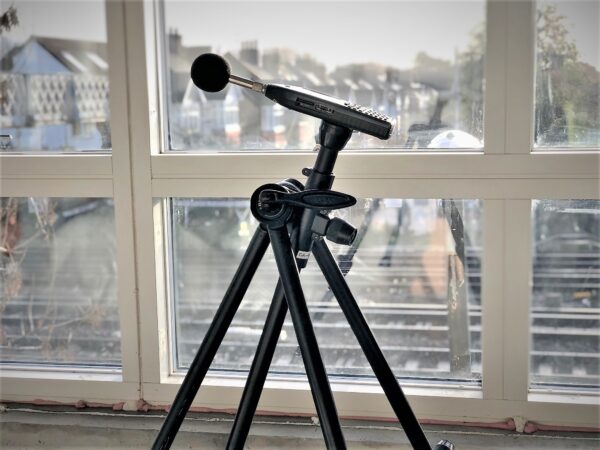
What Is a BS8233 Noise Impact Assessment?
A BS8233 noise assessment evaluates how noise will affect a proposed development, or how a new development may impact the surrounding noise climate. The process typically involves:
- Measuring existing ambient noise levels
- Predicting the impact of new noise sources
- Assessing noise exposure against BS8233:2014 criteria
- Recommending mitigation measures where required
BS8233:2014 provides detailed guidance on sound insulation and noise reduction for buildings, including internal noise criteria for bedrooms, living rooms and other noise‑sensitive spaces.
For more detail, see BS8233 noise assessments.
When Do You Need a BS8233 Noise Impact Assessment?
Local authorities normally request a BS8233 noise assessment during:
- Pre‑application discussions
- Formal planning applications
- Change‑of‑use applications
- Licensing extensions
- Mixed‑use developments
- Residential schemes near transport or commercial noise
In many cases, the planning officer or environmental health team will inform the applicant that a noise assessment is required. This is often triggered by:
- Concerns raised by neighbours
- Increased noise from a proposed use
- Perceived noise risk due to extended operating hours
- Proximity to roads, railways, industrial sites or public houses
If a noise condition is added to your planning permission, you must submit a BS8233 noise report before the development can proceed.
How a BS8233 Noise Impact Assessment Works
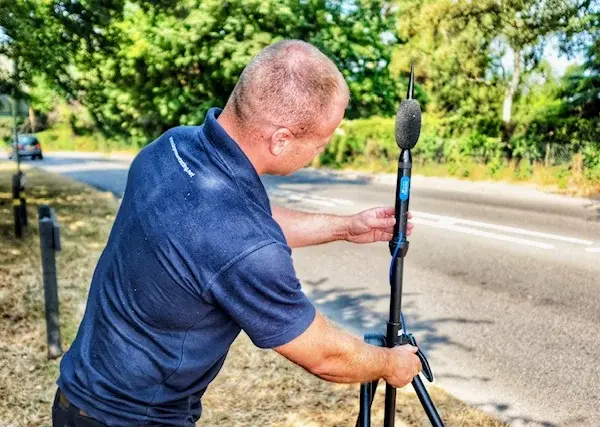
A professional BS8233 noise assessment will:
- Establish a baseline noise climate using calibrated Class 1 equipment
- Measure daytime and night‑time noise levels
- Predict the impact of the proposed development
- Compare results against BS8233 internal noise criteria
- Identify whether noise levels fall into NEC (Noise Exposure Category) A, B, C or D
- Recommend mitigation where required
If direct comparison cannot be made due to practical constraints, acoustic modelling is used to predict future noise levels with high accuracy.
For help with modelling, see noise mitigation design.
What Requirements Are Necessary for a BS8233 Noise Assessment?
A BS8233 noise assessment may recommend control measures to ensure internal noise levels meet the “good” criteria set out in BS8233:2014. These may include:
- Upgraded glazing (e.g., double → triple glazing)
- Acoustic trickle vents
- Enhanced façade design
- Improved ventilation strategy
- Acoustic insulation upgrades
If noise levels fall into NEC Category B or C, mitigation is normally required. If noise levels fall into NEC Category D, planning consent is often refused unless exceptional circumstances apply.
How We Carry Out BS8233 Noise Surveys
Our BS8233 noise surveys are straightforward, non‑intrusive and cost‑effective. In most cases, we install a Class 1 sound level meter for a 24‑hour period to capture:
- LAeq
- LAmax
- Daytime and night‑time noise profiles
- External variables such as traffic flow and site conditions
Once the data is collected, we produce a detailed BS8233 planning noise assessment report with clear recommendations and compliance guidance.
For more information, see planning noise assessments.
Why Choose Us for Your BS8233 Noise Impact Assessment
Choosing the right acoustic consultancy, such as APT Sound Testing can make the difference between a smooth planning process and costly delays. Our clients trust us because:
UKAS‑Accredited Laboratory
All surveys and reports are carried out to the highest technical standards using UKAS‑calibrated Norsonic Class 1 equipment.
25+ Years of Experience
We have delivered thousands of BS8233 noise assessments for residential, commercial and mixed‑use developments across the UK.
Fast Turnaround
We mobilise quickly and deliver reports without unnecessary delays — ideal for tight planning deadlines.
Planning Expertise
We understand exactly what planning officers and environmental health teams expect, ensuring your submission is compliant and robust.
Clear, Practical Advice
We provide straightforward guidance on glazing, ventilation, façade design and noise mitigation to help you achieve approval first time.
For more detail, see acoustic consultancy services.
Contact Us for BS8233 Noise Assessments
If your local authority has requested a BS8233 Noise Impact Assessment, our consultants can help immediately. Please contact us at the following: Email: info@aptsoundtesting.co.uk Call Darren: 07775 623464 Checklist: Noise Assessment Checklist