
BS 8233 Noise Surveys & Assessments for Planning Applications
If you are planning a new residential development, care home, student accommodation scheme, hotel, or mixed-use project, your Local Planning Authority may require a BS 8233 Noise Assessment to demonstrate that future occupants will be protected from excessive environmental noise.
At APT Sound Testing, we undertake BS 8233 noise surveys and assessments throughout the UK, helping developers, architects, planning consultants and landowners satisfy planning conditions and design comfortable living environments.
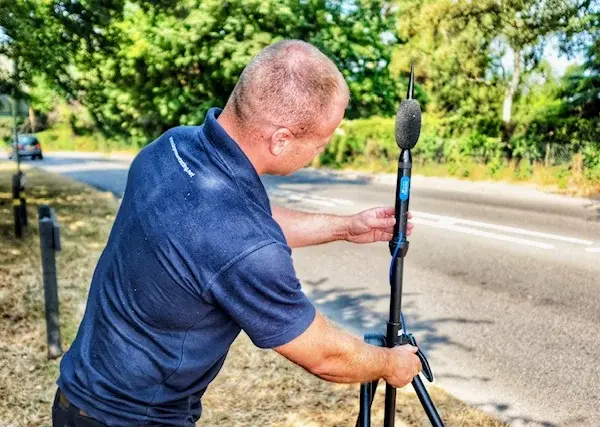
What is a BS 8233 Noise Assessment?
BS 8233:2014 Guidance on Sound Insulation and Noise Reduction for Buildings provides recommendations for acceptable internal and external noise levels within noise-sensitive developments.
A BS 8233 assessment typically considers:
- Road traffic noise
- Railway noise
- Aircraft noise
- Commercial and industrial noise
- Mechanical plant noise
- Entertainment and leisure noise sources
- Existing environmental noise sources surrounding a development
The assessment determines whether suitable internal noise levels can be achieved within future dwellings and whether external amenity spaces such as gardens, balconies and communal areas provide reasonable acoustic conditions.
Why is a BS 8233 Assessment Required?
Local authorities frequently request a BS 8233 assessment when a proposed development is located near significant noise sources.
Common examples include developments adjacent to:
- Main roads and motorways
- Railway lines
- Industrial estates
- Commercial premises
- Distribution centres
- Public houses and restaurants
- Entertainment venues
- Airports
The assessment provides planning officers and Environmental Health Departments with confidence that the development can be occupied without unacceptable noise impacts.
Related Services:
👉 Planning Noise Assessments
👉 Noise Impact Assessments
👉 Acoustic Consultancy Services
Information Required From the Client
To undertake an accurate BS 8233 noise assessment, we normally require the following information.
1. Site Address and Location Plan
The first requirement is confirmation of:
- Full site address
- Site boundary plan
- Site location plan
- Planning application reference number (where available)
This enables us to identify nearby noise sources and determine suitable monitoring locations.
2. Architectural Drawings
We generally require:
- Proposed site layout drawings
- Floor plans
- Elevation drawings
- Building sections
- Roof plans (where applicable)
Architectural drawings allow us to determine the position of noise-sensitive rooms and identify the most exposed façades.
Where available, both PDF and DWG files are beneficial.
Related Service:
👉 Building Acoustic Design Advice
3. Details of Noise-Sensitive Rooms
To assess compliance with BS 8233 recommendations, we need to identify:
Bedrooms
- Master bedrooms
- Secondary bedrooms
- Guest bedrooms
Living Areas
- Living rooms
- Open-plan kitchen/living spaces
- Dining areas
Other Habitable Rooms
- Home offices
- Studies
- Lounges
The location of these rooms influences glazing and ventilation requirements.
4. External Amenity Areas
BS 8233 also considers noise levels within outdoor spaces.
Please provide details of:
- Private gardens
- Balconies
- Roof terraces
- Shared courtyards
- Communal amenity spaces
These areas are assessed to determine whether they offer a reasonable degree of tranquillity for future occupants.
5. Planning Conditions and Environmental Health Comments
One of the most useful documents is the planning officer or Environmental Health response.
Please provide:
- Planning decision notice
- Noise-related planning conditions
- Local Authority consultation responses
- Environmental Health Officer comments
These documents often define the scope of the required assessment.
Related Service:
👉 Planning Condition Discharge Reports
6. Building Construction Information
Where available, we also request details of the proposed building envelope, including:
Glazing Specification
- Double glazing
- Triple glazing
- Acoustic glazing
Ventilation Strategy
- Open-able windows
- Trickle ventilators
- Mechanical ventilation systems
- MVHR systems
External Walls
- Masonry walls
- Timber frame construction
- Lightweight façade systems
This information helps determine whether the proposed specification can achieve the required internal noise targets. We can also help with the acoustic design of your building.
7. Existing and Proposed Noise Sources
Any information regarding known noise sources can assist the assessment, including:
- Nearby industrial activities
- Commercial premises
- Existing plant equipment
- Service yards
- Loading bays
- Entertainment venues
- Proposed mechanical services plant
Where plant equipment is proposed, further assessment under BS 4142 may also be required.
Related Service:
8. Site Access for Noise Monitoring
In many cases, an attended or unattended noise survey is required.
To facilitate the monitoring survey, we require:
- Site access details
- Site contact information
- Suitable monitoring locations
- Security arrangements where equipment is left unattended
APT Sound Testing can advise on suitable monitoring positions to ensure representative results.
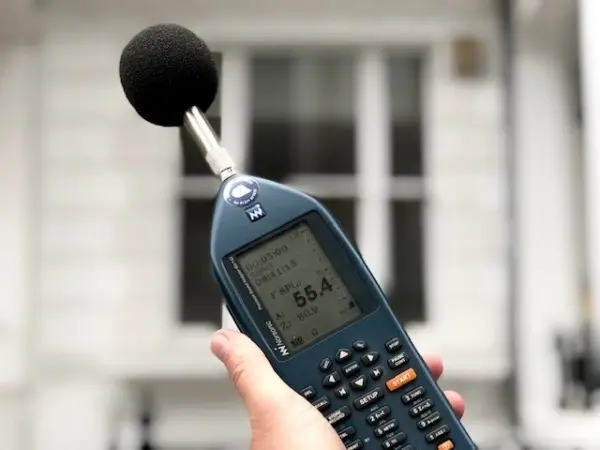
What Happens After the Information Has Been Provided?
Once the required information has been received, APT Sound Testing will:
- Review the proposed development.
- Identify nearby noise sources.
- Undertake environmental noise monitoring where required.
- Assess the development against BS 8233 guidance.
- Recommend mitigation measures where necessary.
- Produce a comprehensive BS 8233 Noise Assessment Report suitable for submission to the Local Planning Authority.
Potential mitigation may include:
- Enhanced glazing specifications
- Alternative ventilation strategies
- Revised façade layouts
- Acoustic barriers
- Building orientation changes
Why Choose APT Sound Testing?
APT Sound Testing provides BS 8233 noise assessments across England, Wales and Scotland.
Our consultants regularly undertake:
- BS 8233 Noise Assessments
- Environmental Noise Surveys
- Planning Noise Reports
- BS 4142 Assessments
- Sound Insulation Testing
- Building Acoustics Consultancy
- Acoustic Design Advice
We work with developers, architects, planning consultants and local authorities to provide practical and cost-effective acoustic solutions.
Contact APT Sound Testing
If you require a BS 8233 Noise Assessment, environmental noise survey or planning noise report, contact APT Sound Testing today.
Our acoustic consultants can review your drawings and planning requirements and provide a competitive quotation for the assessment. We can also provide sound insulation testing at the end of your project.
Contact APT Sound Testing for a BS 8233 Noise Assessment
APT Sound Testing provides BS 8233 Noise Assessments, Environmental Noise Surveys, Planning Noise Reports, BS 4142 Noise Assessments and Noise Impact Assessments throughout the UK using the latest Norsonic acoustic testing equipment.
Whether you require a noise survey to support a planning application, discharge a planning condition or assess environmental noise impacts on a proposed development, our experienced acoustic consultants can help.
To discuss your project or obtain a quotation, please contact our team today:
APT Sound Testing Ltd
📞 Telephone: 01525 303905
📧 Email: info@aptsoundtesting.co.uk
🌐 Website: https://aptsoundtesting.co.uk
Before contacting us, please send through the following information where available:
- Site address
- Site location plan
- Proposed architectural drawings
- Planning application reference
- Environmental Health comments
- Proposed development details
This will allow our consultants to review the scheme and provide the most suitable quotation and advice.