
How to Pass a Smoke Shaft Air Tightness Test: A Complete Guide for Contractors and Developers
Smoke shaft air tightness testing, has become an increasingly important requirement on residential and commercial developments throughout the UK. Whether you are constructing a high-rise apartment block, mixed-use development, student accommodation scheme or commercial building, achieving the required smoke shaft leakage rate is essential for demonstrating compliance with fire strategy requirements and obtaining project sign-off.
Unfortunately, many smoke shafts fail their initial air leakage test due to relatively simple defects that could have been prevented during construction. Understanding how smoke shafts are tested, where leakage commonly occurs and how to prepare for testing can significantly reduce remedial costs and programme delays.
In this guide, we explain exactly how to pass a smoke shaft air test first time.
What is a Smoke Shaft Air Tightness Test?
A smoke shaft air tightness test measures the amount of air leakage escaping through a smoke shaft when subjected to a specified pressure difference.
Smoke shafts form a critical part of many smoke control systems by providing a protected route for smoke extraction during a fire event. Excessive air leakage can compromise system performance, making it essential that smoke shafts achieve the leakage criteria specified by the project’s fire engineer or smoke ventilation designer.
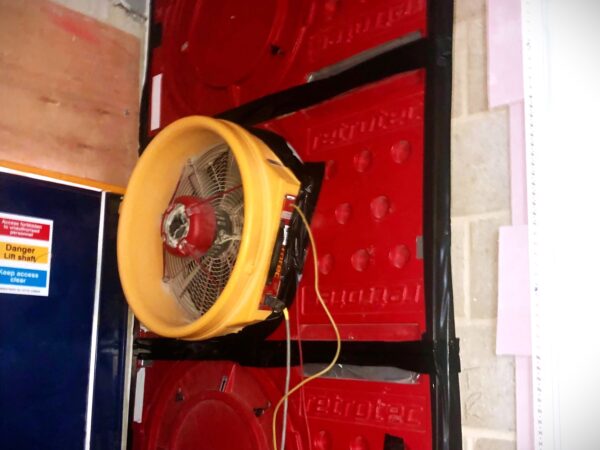
Testing is typically undertaken using calibrated air leakage testing equipment, such as a Retrotec blower door fan system, installed at the base of the smoke shaft. The shaft is then pressurised and the resulting airflow required to maintain the test pressure is measured.
The test determines whether the smoke shaft achieves the required air leakage performance and complies with the project specification.
Why Do Smoke Shafts Fail Air Leakage Testing?
In our experience at APT Sound Testing, most smoke shaft failures are not caused by major design flaws but by relatively minor construction defects.
Common causes of smoke shaft test failures include:
Poorly Sealed smoke shaft Access Doors
Smoke shaft access doors frequently represent one of the largest leakage paths.
Common issues include:
- Damaged door seals
- Missing compression gaskets
- Poorly adjusted door closers
- Distorted door frames
- Gaps around door ironmongery
Even a small gap around multiple doors can create significant leakage during testing.
Incomplete Service Penetration Sealing
Every service penetration through the smoke shaft enclosure must be properly fire stopped and air sealed.
Examples include:
- Electrical containment
- Fire alarm cabling
- Builders work openings
- Mechanical fixing penetrations
Seemingly insignificant gaps can have a major impact on overall air leakage rates.
Defective Drywall Junctions within smoke shafts
Air leakage frequently occurs where walls, floors and ceiling elements meet.
Inspect:
- Board joints
- Movement joints
- Ceiling interfaces
- Head details
- Floor slab connections
Any discontinuity within the smoke shaft lining system can contribute to test failure.
Smoke Vent Interfaces
Smoke ventilator units and Automatic Opening Vents (AOVs) should be checked carefully prior to testing.
Failures can result from:
- Poor actuator adjustment
- Damaged seals
- Incomplete closure
- Manufacturing defects
- Incorrect installation
Preparing for a Smoke Shaft Air Tightness Test
The best way to pass a smoke shaft test is through robust preparation.
Complete All Installation Works
Testing should only be undertaken once all elements of the shaft are complete, including:
- Access doors installed
- Fire stopping completed
- Smoke vents commissioned
- Penetrations sealed
- Building works finished
Testing too early often results in avoidable failures.
Undertake a Visual Inspection
Before booking a test, carry out a detailed walk-through.
Look for:
- Missing sealant
- Unsealed penetrations
- Damaged doors
- Gaps in drywall
- Open service entries
Addressing these items beforehand can save significant costs later.
Perform Preliminary Leakage Checks
Many contractors now request smoke shaft diagnostic testing before the formal compliance test.
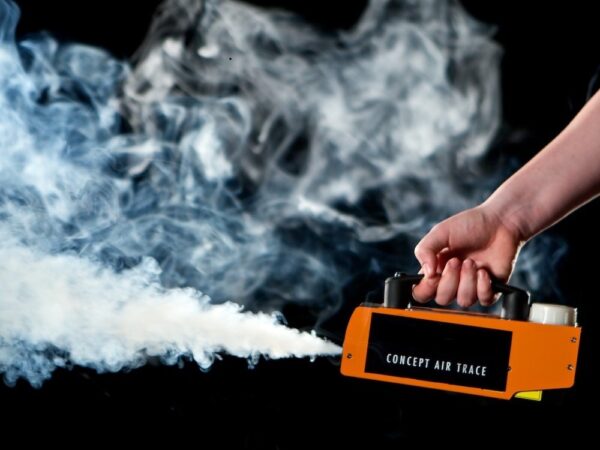
Using smoke machines/pencils, thermal imaging equipment and pressure diagnostics can quickly identify leakage paths before undertaking the final test.
This approach often improves first-time pass rates dramatically, when undertaking an air tightness test to a smoke shaft in multi-storey buildings.
Best Practice Construction Tips
Contractors looking to achieve a first-time pass should focus on creating a continuous airtight barrier throughout the smoke shaft.
Treat the Smoke Shaft Like an Airtight Box
Every element forming the shaft enclosure should be considered part of the air barrier.
Ask yourself:
“If I pressurise this shaft, can air escape through this area?”
If the answer is yes, further sealing may be required.
Focus on Junctions
Most leakage occurs at interfaces rather than within primary construction elements.
Pay particular attention to:
- Wall-to-floor junctions
- Wall-to-ceiling junctions
- Door interfaces
- AOV interfaces
- Builder’s work holes
Protect Seals During Construction
Completed smoke shafts often suffer damage during later trades.
Protect:
- Door gaskets
- Fire stopping
- Sealant lines
- Smoke vents
Conduct a final inspection immediately before testing.
What Happens During Smoke Shaft Testing?
A qualified testing engineer will install calibrated air leakage equipment at the smoke shaft opening.
The smoke shaft is then subjected to a series of pressure measurements.
The engineer will:
- Measure shaft dimensions.
- Install the blower door system.
- Connect pressure measurement equipment.
- Conduct pressure testing.
- Record airflow rates.
- Analyse the results.
- Produce a formal test report.
The report will confirm whether the smoke shaft complies with the specified leakage criteria.
How to Improve First-Time Pass Rates
The most successful contractors adopt a proactive approach.
We recommend:
✅ Engaging with the testing company early.
✅ Reviewing fire strategy leakage requirements before construction begins.
✅ Inspecting smoke shaft works regularly.
✅ Sealing penetrations immediately after installation.
✅ Carrying out pre-test quality inspections.
✅ Undertaking diagnostic testing where possible.
These simple measures can dramatically reduce the risk of failure.
FAQ for Passing Smoke Shaft Testing
What is a smoke shaft air tightness test and why is it important?
A smoke shaft air tightness test measures the amount of air leakage through a smoke shaft when subjected to a specified pressure difference. It is important because excessive leakage can compromise the smoke control system’s performance and prevent project sign‑off, ensuring the shaft meets the leakage criteria set by the fire engineer or smoke ventilation designer.
Why do smoke shafts often fail air leakage testing?
Most failures arise from relatively minor construction defects rather than major design flaws. Common causes include poorly sealed access doors, incomplete service penetration sealing, defective drywall junctions, and issues with smoke vent interfaces such as actuator adjustment or damaged seals.
What should be done to prepare for a smoke shaft air tightness test?
Prepare by completing all installation works, conducting a thorough visual inspection for missing sealant, unsealed penetrations, damaged doors and gaps in drywall, and addressing open service entries. Perform preliminary leakage checks with diagnostic tools to identify leakage paths before the formal test.
What happens during the actual smoke shaft test?
A qualified testing engineer installs calibrated equipment at the shaft opening, pressurises the shaft, and records airflow rates while measuring shaft dimensions and conducting pressure tests. A formal test report is produced to confirm whether the shaft complies with the specified leakage criteria.
How can first-time pass rates be improved?
Adopt a proactive approach: engage the testing company early, review leakage requirements before construction, inspect works regularly, seal penetrations promptly, perform pre-test quality inspections, and where possible carry out diagnostic testing to identify and remediate leakage paths before the formal test.
Why Choose APT Sound Testing?
APT Sound Testing provides independent smoke shaft air tightness testing services throughout the UK.
Using UKAS calibrated equipment and industry-recognised testing methodologies, we help contractors, developers and smoke control specialists demonstrate compliance efficiently and cost-effectively.
Our experienced engineers provide practical on-site guidance both before and during testing, helping clients identify potential issues before they impact programme delivery.
Whether your project involves a single smoke shaft or multiple shafts within a large high-rise development, APT Sound Testing can provide reliable testing, fast reporting and responsive technical support to help you pass your smoke shaft air test at the first attempt.
BIO – About Darren Helliwell
Darren Helliwell
Director | APT Sound Testing | Smoke Shaft Air Tightness Testing Specialist
Darren Helliwell is a Director of APT Sound Testing, one of the UK’s leading independent building compliance testing consultancies. With extensive experience in air tightness testing, acoustic testing, ventilation testing and indoor environmental quality assessments, Darren has helped contractors, developers and specialist smoke ventilation companies achieve compliance on projects throughout the UK.
Darren has been involved in the testing of smoke control systems and smoke shafts across a wide range of residential, commercial and mixed-use developments. Working alongside principal contractors, fire engineers and smoke ventilation specialists, he provides practical guidance and reliable testing services to verify smoke shaft air leakage performance in accordance with project specifications and industry standards.
APT Sound Testing operates using UKAS calibrated equipment and industry-recognised testing methodologies, delivering accurate and dependable results that support Building Regulations compliance and fire safety requirements. Darren’s hands-on approach, technical knowledge and commitment to customer service have made APT a trusted partner for many of the UK’s leading construction companies.
Whether your project involves a single smoke shaft, multiple cores within a high-rise development or complex smoke control systems, Darren and the APT team can provide fast turnaround times, expert technical support and comprehensive reporting.
Request a Smoke Shaft Air Tightness Testing Quotation
Need Smoke Shaft Air Testing?
APT Sound Testing provides professional Smoke Shaft Air Leakage Testing services across the UK.
✅ Nationwide Coverage
✅ UKAS Calibrated Equipment
✅ Rapid Report Turnaround
✅ Experienced Test Engineers
✅ Residential & Commercial Projects
✅ High-Rise Development Specialists
📞 07775623464
🌐 https://aptsoundtesting.co.uk
📧 info@aptsoundtesting.co.uk
Get a Fast Quote Today
If you have an upcoming smoke shaft air tightness test requirement, contact Darren Helliwell and the APT Sound Testing team today. We can provide competitive quotations, technical guidance and rapid testing appointments to help keep your project on programme and achieve compliance first time.
APT Sound Testing – Trusted Specialists in Smoke Shaft Air Tightness Testing Across the UK.