
A BS8233 noise assessment is a key requirement for many planning applications involving new residential or mixed‑use developments. When completed correctly, it demonstrates that internal noise levels will meet the recommended criteria set out in BS8233:2014 – Guidance on Sound Insulation and Noise Reduction for Buildings.
However, many assessments fail on the first submission due to avoidable issues such as poor baseline data, incorrect façade calculations, or unrealistic ventilation assumptions. This guide explains how to pass a BS8233 noise assessment first time, helping you avoid planning delays and costly redesigns.
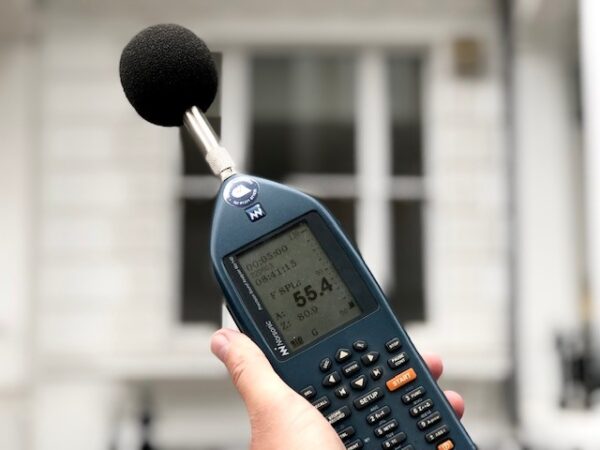
1. Start With High‑Quality Baseline Noise Monitoring
The foundation of any BS8233 assessment is accurate, representative noise data.
To pass first time, ensure that:
- Monitoring covers daytime and night‑time periods
- LAmax events are captured for bedrooms
- Class 1 UKAS‑calibrated equipment is used
- Microphones are positioned correctly
- Measurements reflect worst‑case exposure
Poor data leads to incorrect predictions — and planning refusal.
Learn more:
👉 BS8233 Noise Surveys
https://aptsoundtesting.co.uk/bs8233-noise-surveys/
2. Apply BS8233 Internal Noise Criteria Correctly
Many assessments fail because the wrong internal noise limits are applied.
To pass first time, ensure:
- Daytime limits are used for living rooms
- Night‑time limits are used for bedrooms
- LAmax criteria are included
- Room usage is correctly classified
- WHO and local authority guidance is referenced where required
Incorrect criteria = automatic rejection.
Full guidance here:
👉 BS8233 Noise Assessment
https://aptsoundtesting.co.uk/bs8233-noise-assessment/
3. Use Accurate Façade and Glazing Calculations in the report
Even with perfect noise data, assessments fail if façade calculations are wrong.
To pass first time:
- Use manufacturer‑tested Rw values, not generic assumptions
- Include ventilation openings in calculations
- Consider flanking paths
- Model the entire building envelope, not just windows
- Ensure glazing and ventilation work together
See detailed façade guidance:
👉 Façade Noise Calculations
https://aptsoundtesting.co.uk/facade-noise-calculations/
4. Choose a Ventilation Strategy That Works With BS8233
This is one of the most common reasons assessments fail.
To pass first time:
- Avoid standard trickle vents in high‑noise areas
- Use acoustic trickle vents or MVHR where appropriate
- Ensure ventilation noise does not exceed internal limits
- Consider overheating requirements (Part O)
- Avoid assuming windows can be left open in noisy locations
Ventilation must support — not undermine — internal noise targets.
More information:
👉 Acoustic Ventilation Strategies
https://aptsoundtesting.co.uk/acoustic-ventilation-strategies/
5. Address LAmax Night‑Time Noise Properly
Local authorities are increasingly strict about LAmax levels, especially near:
- Railways
- Busy roads
- Flight paths
- Industrial sites
To pass first time:
- Capture LAmax events during monitoring
- Use correct night‑time bedroom criteria
- Provide mitigation where peaks exceed limits
- Justify assumptions clearly
Ignoring LAmax is one of the fastest ways to fail.
6. Provide Clear, Practical Mitigation Measures in the report
Planning officers expect specific, actionable recommendations, not vague statements.
Your report should include:
- Exact glazing specifications (e.g., Rw + Ctr values)
- Ventilation types and acoustic performance
- Façade construction details
- Outdoor amenity noise mitigation
- Layout recommendations (e.g., bedrooms away from noise sources)
Generic advice = planning refusal.
7. Produce a Clear, Well‑Structured Noise Survey Report
Even technically correct assessments can fail if the report is unclear.
To pass first time, ensure your report includes:
- A clear methodology
- Calibration certificates
- Raw data and measurement logs
- BS8233 criteria tables
- Façade and ventilation calculations
- A summary of compliance
- A clear conclusion
A planning officer should be able to understand your report without specialist knowledge.
8. Use an Experienced Acoustic Consultant
The easiest way to pass a BS8233 assessment first time is to use a consultant who:
- Has 25+ years of experience
- Understands planning requirements
- Uses UKAS‑calibrated Class 1 equipment
- Provides proactive design advice
- Understands real‑world construction constraints
APT Sound Testing specialises in BS8233 assessments and provides clear, planning‑friendly reports trusted by local authorities.
Learn more:
👉 BS8233 Noise Surveys for New Developments
https://aptsoundtesting.co.uk/bs8233-noise-surveys-for-new-developments/
Related Reading (Latest BS8233 Blogs)
Here are all the latest BS8233‑related articles on our site:
- BS8233 Noise Surveys
https://aptsoundtesting.co.uk/bs8233-noise-surveys/ - BS8233 Noise Assessment
https://aptsoundtesting.co.uk/bs8233-noise-assessment/ - BS8233 Noise Surveys for New Developments
https://aptsoundtesting.co.uk/bs8233-noise-surveys-for-new-developments/ - BS8233 Internal Noise Level Criteria & Acoustic Design Guidance
https://aptsoundtesting.co.uk/bs8233-internal-noise-level-criteria-acoustic-design-guidance/ - Common Reasons Why BS8233 Noise Assessments Fail
https://aptsoundtesting.co.uk/common-reasons-why-bs8233-noise-assessments-fail/ - How to Pass a BS8233 Noise Assessment First Time
How to Pass a BS8233 Noise Assessment First Time – APT Sound Testing - Planning Noise Surveys
https://aptsoundtesting.co.uk/planning-noise-surveys/ - Façade Noise Calculations
https://aptsoundtesting.co.uk/facade-noise-calculations/ - Acoustic Ventilation Strategies
https://aptsoundtesting.co.uk/acoustic-ventilation-strategies/
Contact Us
If you need help with a BS8233 noise assessment — or want to ensure your project passes first time — our UKAS‑accredited team is here to help.
📞 Call Darren: 07775 623464
📧 Email: info@aptsoundtesting.co.uk
🌐 Website: https://aptsoundtesting.co.uk (aptsoundtesting.co.uk in Bing)
We provide fast, accurate and fully compliant BS8233 noise assessments across London and the UK.